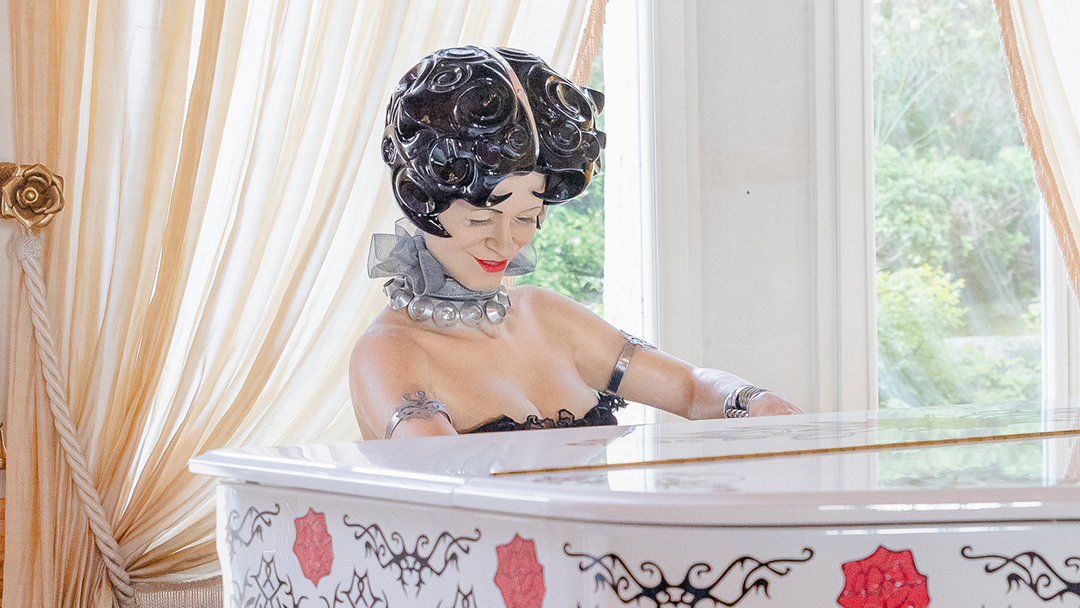

Performances (2007–2023) – The Body as Artwork
Beatriz Millar’s performative practice marks a structural shift in her work: the body ceases to function solely as an instrument and becomes artwork, medium, and site of transformation.
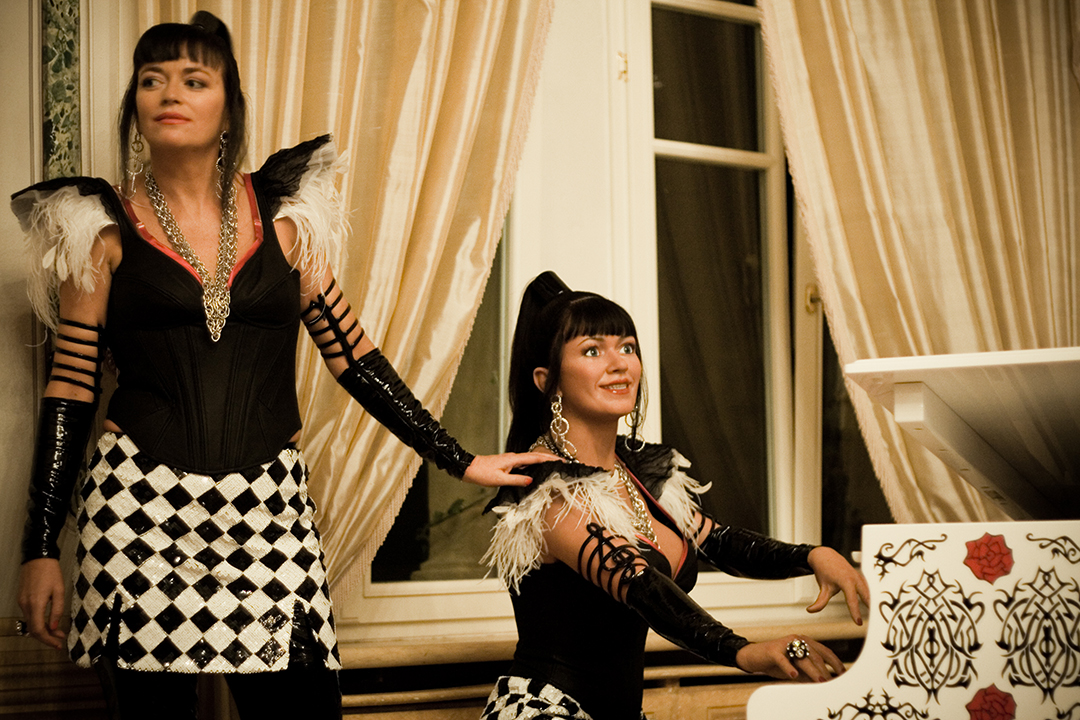
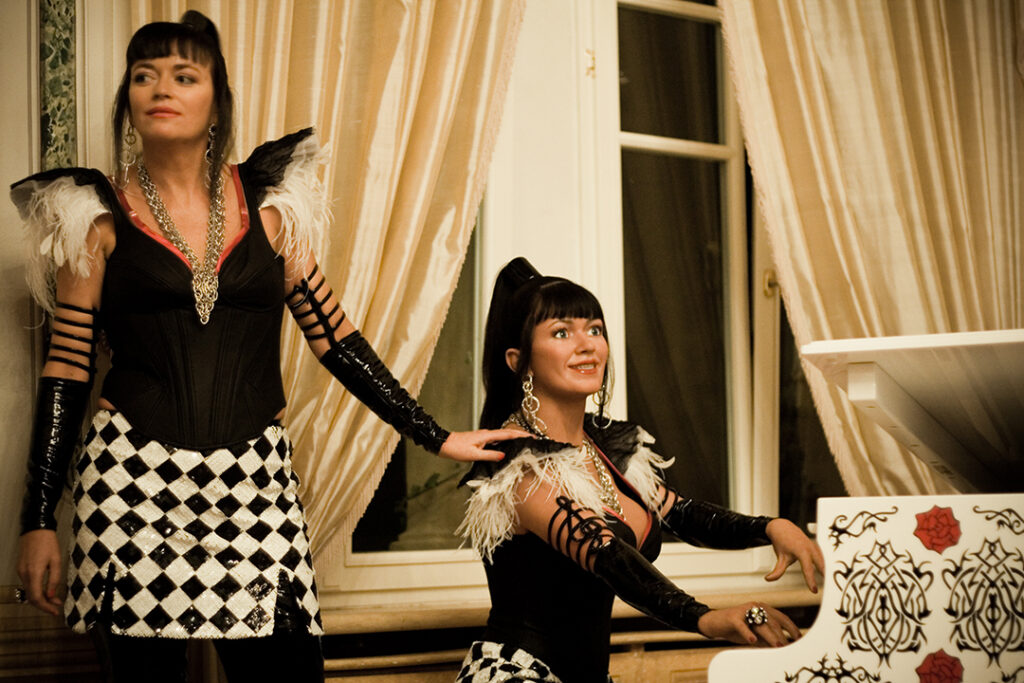
The first performance took place at the Byblos Art Hotel in Verona (2007) with Clown Clone and the Piano Tattoo, later presented at the Palazzo dei Congressi in Rome (2008). The alter ego was constructed using silicone skin, feathers, and sequins. Costume and disguise functioned as mechanisms of identity construction rather than concealment.
In Bologna (2010), within a boudoir setting, BEATRIZIFAL’s Tarot positioned the artist as a reader and mediator of symbolic systems. The performance established an intimate encounter structured around archetypal imagery and narrative exchange.
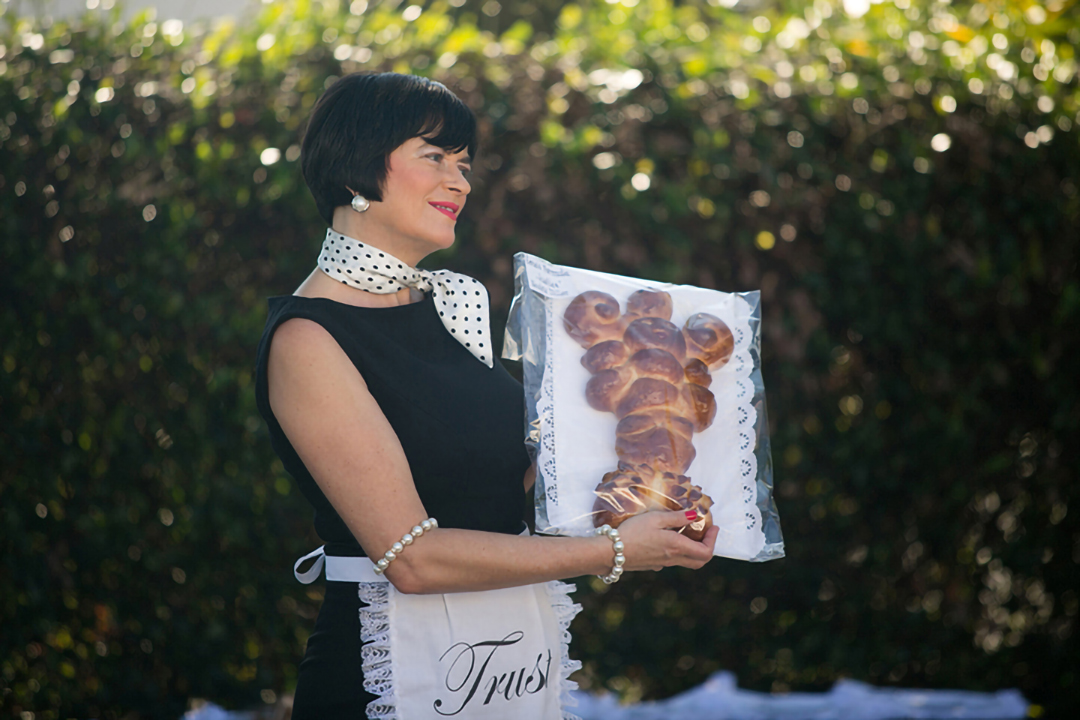
In Turin (2012) Lux Mater introduced a ritual framework: dressed in red and white, wearing an apron marked with the virtue “charity” and reciting the Lord’s Prayer in Aramaic, the artist enacted the formation of bread figures. The performance articulated transformation through gesture, repetition, and material process.
With EENA’s Formula (Palm Beach, 2013) a seven-day structure organized around virtues and nourishment further positioned the body as operative agent within an ethical and relational framework.
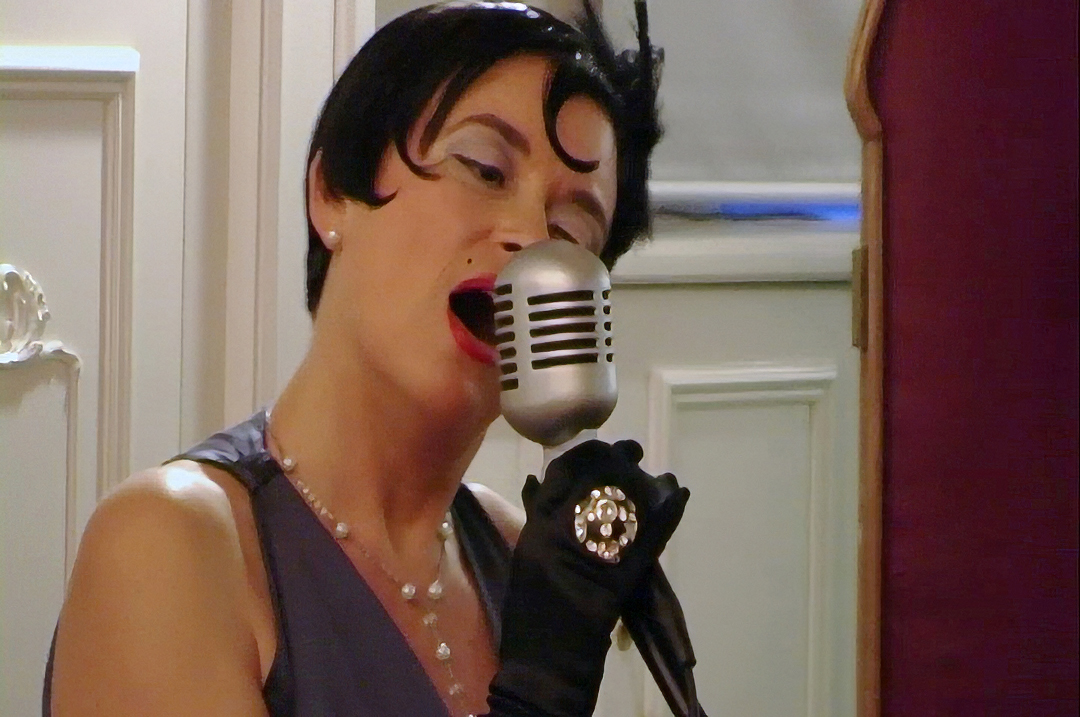
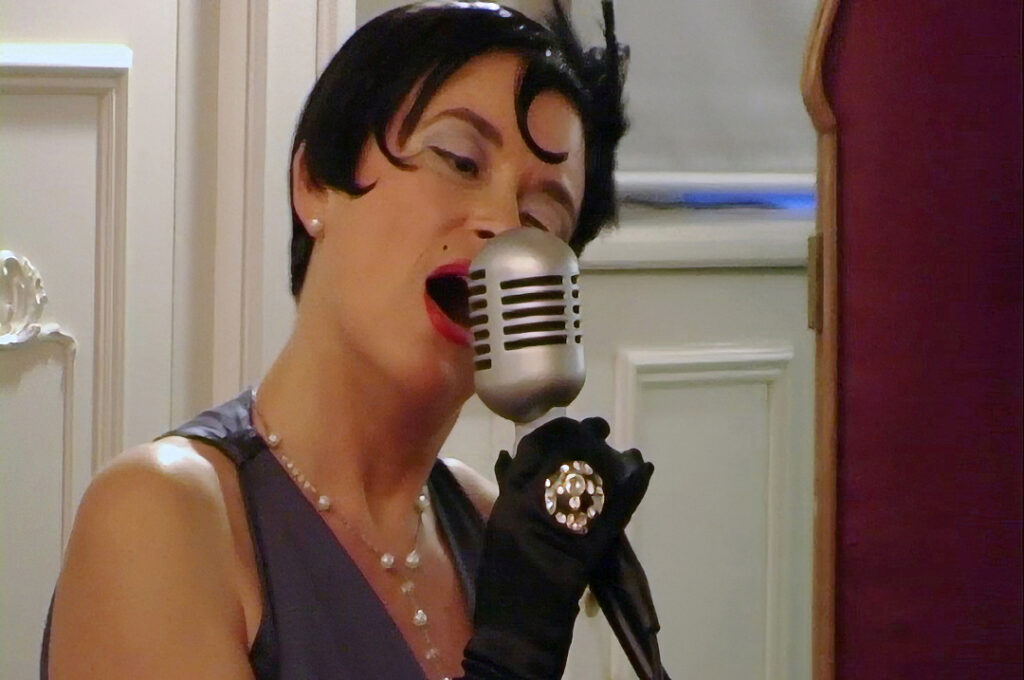
Two years later, again in Palm Beach, Plastic Dorianne in Love (2015) developed a performative alter ego engaged in musical interpretation, drawing on the repertoire associated with Marlene Dietrich. Identity was approached as mutable configuration rather than fixed role.
Most recently, Juliet the B-Boop (2023) introduced a performative sculpture: a woman-robot figure capable of speech and response exclusively to its creator. The work merges performativity with technological mediation.
Across this trajectory, identity is generated rather than represented. Each performance functions as a constructed act of embodiment in which the body operates simultaneously as author, medium, and object.
Clown Clone and the Piano Tattoo 2007
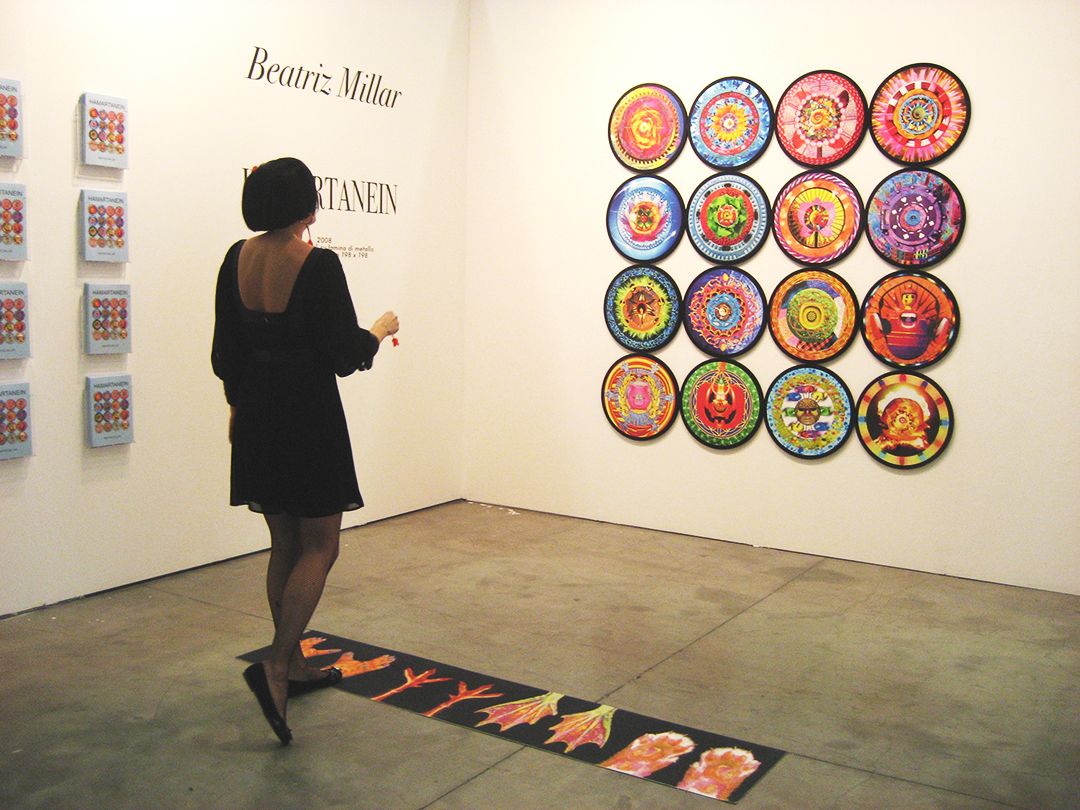
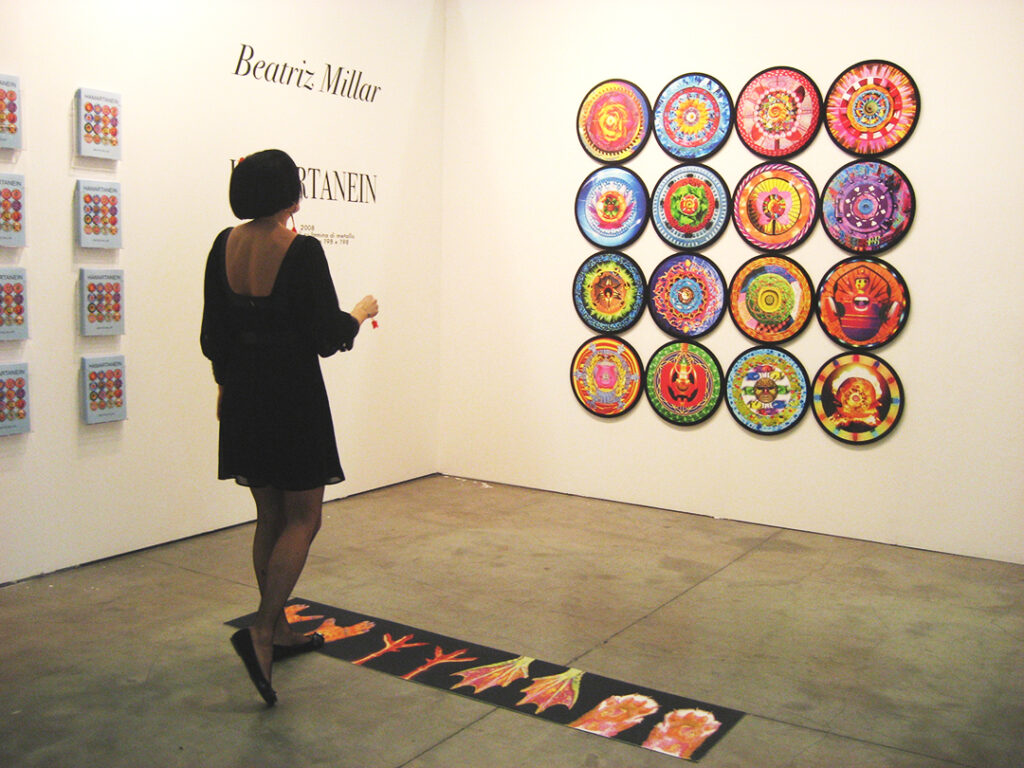
Hamartanein
Performance_Blue(S)atin
Padre Nostro
Eena's Formula 2013
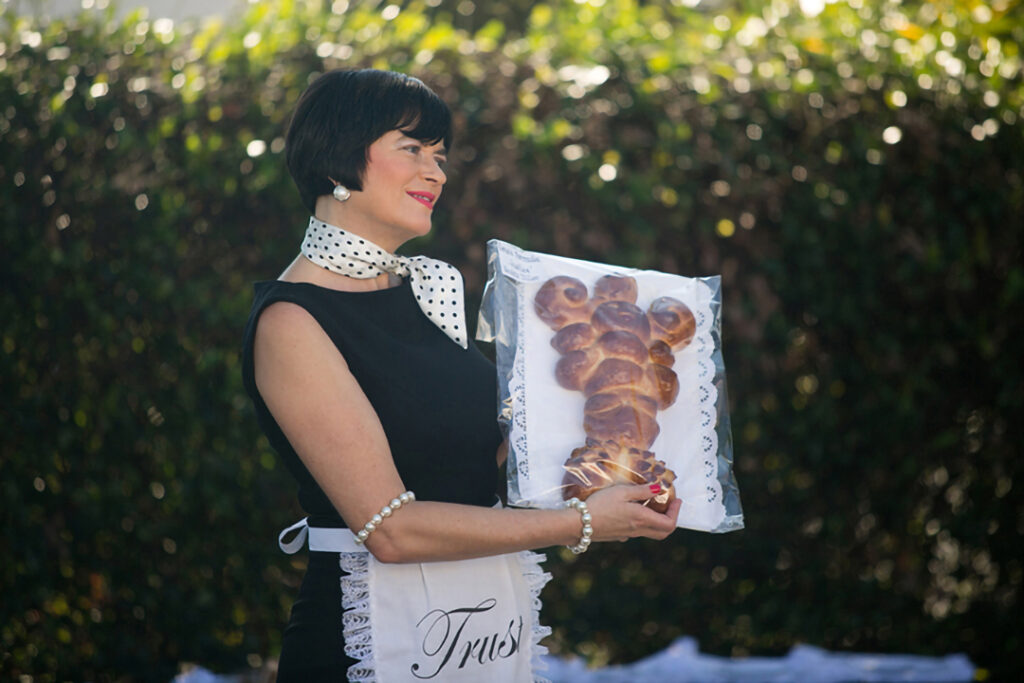
Plastic Dorianne in Love 2015
Packaging SPECIAL EDITION 2022 per Emsibeth
The exotic Tropical fragrance of the Emsibeth mask — an imagined blend of hibiscus, mango, passion fruit, pineapple, and coconut — becomes, for the artist, a sensory journey toward distant lands.
Fantasies of paradise flowers and vividly colored birds emerge. Imagination takes shape in an iconic figure: a contemporary Carmen Miranda, crowned with a pyramid of fruit, dancing to a samba rhythm with a “tropical rock” spirit — ironic and free.
The entire project is created exclusively with pastels and felt-tip markers, with no digital intervention, as a tribute to the feminine craftsmanship of tropical countries. A manual and authentic creative gesture, where matter — animated by spirit — becomes an expression of the soul.
Juliet the B-Boop 2023
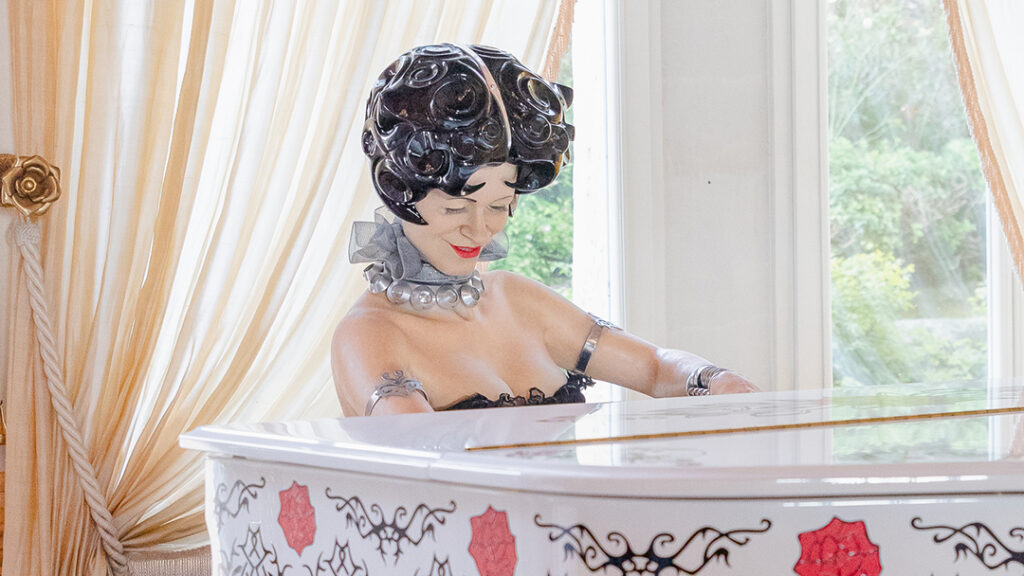
Myten limited edition 2024
Bio Bea
PRIVATE PORTRAITS: The Three Ages
Beatriz Millar was born in 1961 at Mühlestrasse 13 in Einsiedeln, Switzerland.
The earliest photographs show her as a child: curious, impatient to outrun time as she opens the little doors of the Advent calendar before the right day. She plays with a doll that resembles her — a first unconscious self-portrait — and gives her father yellow roses, bought by her mother.
There is also an image of her with skis on her feet, poles in hand, and snow goggles on, standing inside the living room at home. Skiing among the furniture as if it were a real slope: a comic and provocative gesture, already a prelude to her way of being.
Then come photographs from her years of teaching, and the great shift: from Switzerland to the wider world, from the classroom to fashion, to art.
From the face, the story begins.
The physicality of the face becomes language: expressions, gazes, variations, different hairstyles. Portraits that mark passages and transformations.Then comes the desire for art. A necessity.
Painting, photography, sculpture, engravings on plexiglass, digital images, performance — not as techniques, but as a crossing-through.In 2022 she decides to stop dyeing her hair.
She welcomes time. She lets it remain visible.Music accompanies this journey like a second track.
At the origin, the Swiss-German text by Arthur Beul, born in Einsiedeln like her: a root, a language, a sound that stays.
Then Harbor Lights, made famous by The Platters. The harbor lights on the water: waiting, distance, departure.
Then comes Blaue Nacht am Hafen, sung by Lale Andersen. Blue night, horizon, journey.
Finally, Never on Sunday, from the film starring Melina Mercouri, in Dalida’s intense version. Time becomes rhythm. Choice. Freedom.
Images and music weave together.
Origin.
Displacement.
Waiting.
Night.
Rhythm.Three ages. One single thread.
Transformation is not loss.
It is evolution.